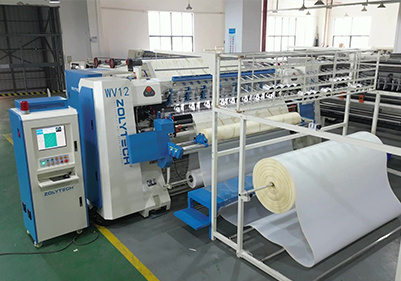
Significant progress in our quilting and other home textile machinery lines has created an imperative for production expansion.
The Quilting Machine and Home Textile Equipment Sector: An Analysis of Market Dynamics and Future Prospects (2018)
The existence and development of quilting machines and other home textile equipment are intrinsically tied to the vast home textiles market. What was the market landscape for these machines in 2018? The answer is inextricably linked to the performance of the home textiles industry itself. This analysis explores the progression of the home textile sector, providing critical data to inform future production planning and equipment investment decisions.
I. Analysis of Market Concentration in the Home Textile Industry
A "pyramid" structure, comprising large, medium, and small enterprises, has been established within China's home textile industrial clusters. This framework allows companies of different scales to leverage their respective advantages, creating an effective complementary mechanism that fosters rapid industry growth. Concurrently, regional brand awareness has significantly increased. Companies, supported by these clusters, have enhanced external promotion and collectively participated in major exhibitions and exchange events. Each cluster actively implements initiatives led by the China National Textile and Apparel Council, leading to notable improvements in industrial structure, product grade, business order, and external exchanges. Regarding the regional distribution of home textile enterprises in China, they are primarily concentrated in East and South China, which together account for nearly 60% of the total.
II. Analysis of Demand Scale in China's Textile Industry
After years of development, China's textile industry has evolved into a modern system comprising three main segments: Home Textiles, Apparel Textiles, and Technical Textiles. The consumption ratio of these three segments in China is approximately 28:47:25. The domestic market size of the home textile industry has shown a steady upward trend, driven by national economic growth. In 2010, the market size was RMB 116.816 billion, growing to RMB 186.981 billion by 2015, representing a Compound Annual Growth Rate (CAGR) of 9.87%. With ongoing urbanization and continuous improvement in living standards, the industry holds broad prospects. It is projected to maintain a CAGR of 5.3% over the next five years, reaching an estimated market size of RMB 242.398 billion by 2020.
Home textiles can be further categorized into Bedding, Kitchen and Dining Textiles, Bath Textiles, Living Room Textiles, and Carpets. As a core component, Bedding accounts for over half of the total home textile sales. As the domestic home textile market continues to develop, the bedding sub-segment is expected to grow at a CAGR of 6.2%, with sales projected to reach RMB 140 billion by 2020.
III. Trends and Prospects in the Textile Industry
According to surveys by the China Home Textile Industry Association, home textiles account for about 33% to 38% of total textile consumption in developed regions such as the United States, Europe, and Japan. In contrast, the share in China currently stands at approximately 28.6%, indicating significant potential for growth compared to mature markets.
Rising Consumption Levels Drive Upgrading Consumer Habits: The consistent increase in China's per capita GDP and living standards marks a societal shift from "subsistence" to "moderate prosperity." Consumer demand for living environments is evolving from practicality and economy towards comfort, cultural appeal, and personalization, subsequently transforming bedding consumption patterns. Further rises in disposable income will unlock even greater potential in the domestic bedding market.
Significantly Improved Housing Conditions Fuel Bedding Demand: Since 1999, nationwide reforms of the urban housing system have spurred the growth of the real estate and construction sectors, markedly improving housing conditions for residents. The substantial increase in the saleable area of residential commercial buildings has created a corresponding surge in demand for bedding. Based on consumer habits, approximately 82% of Chinese consumers purchase various bedding products when renovating or moving into a new home. The emphasis on environmental aesthetics, enhanced lifestyle quality, and the pursuit of personalized culture and living art have become standards for furnishing new residences, significantly stimulating bedding consumption.
Continued Urbanization Expands the Consumer Base for Bedding: The ongoing urbanization process is continuously introducing new consumers into the market for home textile products, including bedding, ensuring a expanding customer base for the foreseeable future.